Working hours:
09:00 - 19:00
Phone:
+385 51 770 100
Email:
info@pp-ucka.hr
The purpose of this approach is to increase visitor engagement, encourage active participation (not just passive observation), and thus achieve a deeper understanding and connection with the values of this protected area. In museological terms, the interpretive centre pushes the boundaries of a traditional museum—it doesn’t focus on valuable artifacts displayed in glass cases, but rather on an experiential and educational multimedia concept that encourages exploration and personal discovery.
The interpretive exhibition is designed for all generations. Young visitors can learn about local plants and animals through play and fun, as well as about myths and legends that the Učka mountain has been telling for centuries. It is also a true treasure trove of data—texts, photographs, replicas, and other exhibits related to the natural and cultural heritage of the region. Rich in content, the exhibition allows each visitor to embark on an adventure—to “get lost” in the mountain’s features, expand their knowledge, or discover this fascinating region the very first time they visit it.
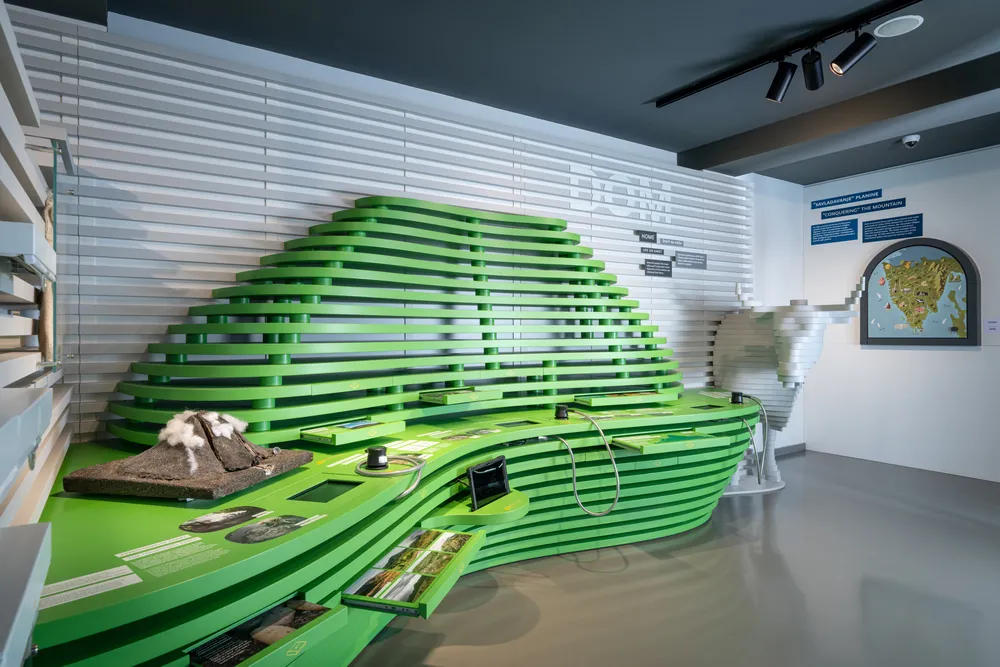
Explore the green slopes of Učka and discover traditional crops nestled in the mountain landscape. Along the way, you’ll meet the hardworking Istrian ox (boškarin), and next to the sculpture of the traditional Istrian sheep pramenka, you’ll learn how important sheep farming once was for the community.
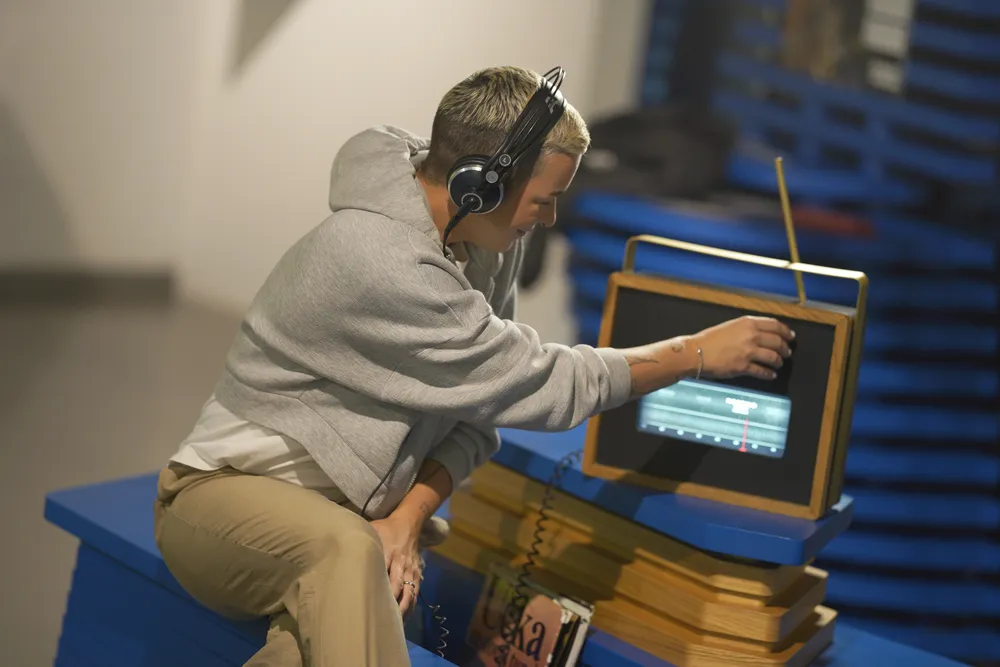
On the mountain meadows you'll see headphones and screens that invite you to watch three short films about traditional crafts and the people who still practice them today: you'll see how to make authentic Učka cheese, build a dry-stone wall, or construct a charcoal kiln (karbunica).
After hearing the story of dry-stone wall building—recognized as UNESCO intangible heritage—try your skills in a digital wall-building game on the provided tablet.
The story of mountain life continues inside a traditional house. Each of the three “rooms” tells a story about the intangible heritage that has shaped local lives: religion, myths and legends, settlements, gastronomy, music, and language.
Here, you can meet Slavic gods and Učka fairies, learn how to cook pašta i fažol (pasta and beans), play the cindra instrument, and greet someone in the Istro-Romanian language.
After visiting the mountain dwellers, step into the central part of the museum, which features a kinetic 3D model of Učka Nature Park.
By selecting one of fourteen themes on the control panel, you will activate 30,000 moving pins that show how this area has changed over time, how it was shaped through history, and what can be found here today.

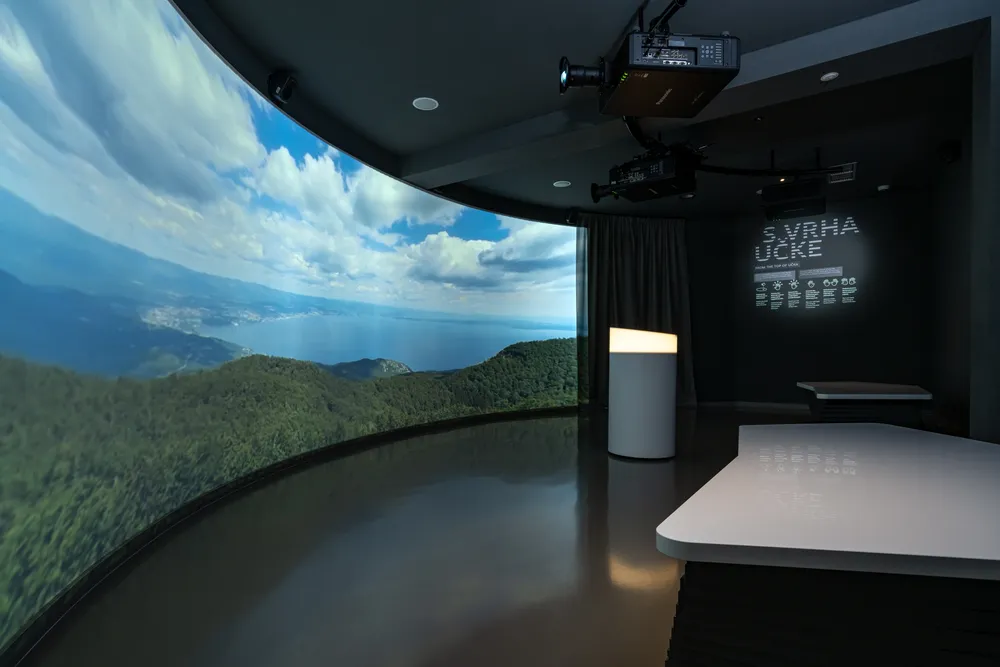
On a large screen, you can experience panoramic views of the Kvarner Bay, islands, the Istrian Peninsula, and the peaks of Slovenian and Italian mountains.
To fully enjoy the 360° view, you’ll need a touch of magic – stand behind the illuminated console and use your hands to control the image by following the on-screen instructions.
As you admire the snowy Ćićarija range, the greenery surrounding Rijeka, or the star-filled night sky, your indoor journey from the underground to the summit comes to an end, inviting you to continue the adventure outdoors.
Take a bike ride, hike, or mountain walk along one of the many trails leading from the Poklon Pass through various parts of the Park and discover pieces of this “museum in nature” for yourself.